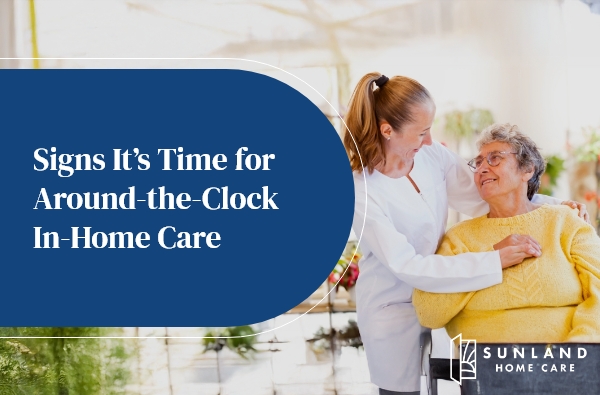
As seniors age, there may come a time when occasional help is no longer enough. Families often begin to notice safety concerns, health changes, or increasing care needs that require around the clock in home care. This type of care provides continuous support day and night, allowing seniors to remain safely in their own home while receiving the attention they need.
Understanding the signs that it may be time for around the clock in-home care can help families make proactive decisions that protect their loved one’s safety, comfort, and independence.
What Is Around the Clock In-Home Care?
Around the clock in-home care means a caregiver is available 24 hours a day to assist with a senior’s needs. This type of care ensures that someone is always present to help with mobility, medication reminders, meals, companionship, and safety monitoring.
Caregivers may assist with:
- Personal care such as bathing, dressing, and grooming
- Medication reminders
- Meal preparation and nutrition support
- Mobility assistance and fall prevention
- Companionship and emotional support
- Overnight supervision and safety monitoring
- Transportation to appointments and errands
This type of 24/7 in home care is especially beneficial for seniors whose needs extend beyond daytime hours.
7 Signs It’s Time for Around the Clock In-Home Care
If you’re unsure whether now is the right time, here are some common signs that may indicate your loved one could benefit from 24/7 or around the clock in-home care in-home care.
1. Frequent Falls or Mobility Issues May Require Around the Clock In-Home Care
Falls are one of the most common safety concerns for seniors living at home. If your loved one has experienced multiple falls or has difficulty moving safely around the house, it may be time to consider around the clock in home care.
A caregiver can assist with mobility, provide steady support while walking, and help prevent accidents before they occur.
2. Difficulty Managing Daily Activities
Struggling with basic tasks like bathing, dressing, eating, or moving safely around the home can signal that more consistent care is needed. When these challenges become overwhelming for family caregivers—or when a senior’s needs exceed what can be managed in a few hours a day—around-the-clock in-home care ensures that help is always available for both essential and personal activities.
3. Needing Help During the Night
Many seniors begin experiencing changes in sleep patterns as they age. Some wake frequently during the night, become confused, or attempt to move around the home when it may not be safe.
A caregiver present overnight can provide reassurance, assistance, and supervision to prevent nighttime accidents.
4. Difficulty Managing Medications
Many seniors take multiple medications that must be taken at specific times. Missing doses or taking incorrect amounts can create serious health risks.
With around the clock in-home care, caregivers can provide medication reminders and help maintain a consistent routine.
5. Increased Caregiver Burnout
Many families initially step in to help aging parents themselves. While this support comes from a place of love, caregiving responsibilities can quickly become overwhelming—especially when supervision is needed throughout the day and night.
Around the clock in home care provides families with much-needed relief while ensuring their loved one receives consistent support.
6. A Decline in Health or Cognitive Abilities
If your loved one has experienced a recent hospitalization, worsening medical conditions, or more rapid cognitive decline, the level of care required may simply be too great for part-time assistance. Around-the-clock in-home care ensures that medical needs, mobility assistance, and emotional support are provided consistently, day and night.
Benefits of Around the Clock In-Home Care
Choosing around the clock in home care allows seniors to remain in the environment they know best while receiving personalized attention.
Some of the key benefits include:
- Continuous safety monitoring
- Immediate assistance whenever needed
- Reduced risk of falls and accidents
- Personalized care tailored to the individual
- Emotional companionship and support
- Peace of mind for family members
For many families, 24 hour in home care provides a compassionate alternative to institutional care settings.
The Peace of Mind Families Deserve
Making the decision to move to 24/7 in-home care can feel overwhelming, but it doesn’t have to be. Around-the-clock in-home care is designed to keep your loved one safe, comfortable, and supported in the place they love most—their home. Families gain peace of mind knowing someone is always there to provide assistance, whether it’s during the day, overnight, or in emergencies.
Considering Around-the-Clock In-Home Care for Your Aging Parent?
If you’re noticing these signs in your loved one, it may be time to explore around the clock in-home care. Sunland Home Care provides personalized care plans and same-day or next-day in-home assessments to help families find the right level of support.
Schedule a care planning call or call us today to learn more about our around-the-clock in-home care services and how we can provide the peace of mind your family deserves. Same-day or next-day assessments available.
Frequently Asked Questions About Around the Clock In-Home Care
What does around the clock in-home care mean?
Around the clock in-home care means a caregiver is available 24 hours a day to assist with a senior’s needs. This may include personal care, companionship, mobility support, medication reminders, and safety monitoring throughout the day and night.
When do seniors need around the clock care?
Seniors may benefit from around the clock care if they experience frequent falls, dementia-related wandering, nighttime confusion, difficulty managing medications, or require assistance with multiple daily activities.
Is around the clock in-home care better than a nursing home?
For many families, in-home care allows seniors to remain in familiar surroundings while receiving personalized attention. Each situation is unique, but many seniors experience improved comfort and quality of life when care is provided at home.