When you’re looking for a caregiver job, the work itself is only part of the experience. The company behind you—how it handles employment, training, scheduling, communication, care coordination, and day-to-day support—can make an important difference.
At Sunland Home Care, caregivers are W-2 employees who work as part of an established Arizona home care company and a broader care team. That means caregivers aren’t simply matched with a client and expected to figure everything out on their own. There is an organizational structure behind the care being provided, from caregiver screening and training to scheduling, documentation, care coordination, and office support.
For caregivers searching for W-2 caregiver jobs in Arizona, understanding that support structure can help you decide whether Sunland Home Care is a good fit for what you want from your next position.
What Does It Mean to Be a W-2 Caregiver?
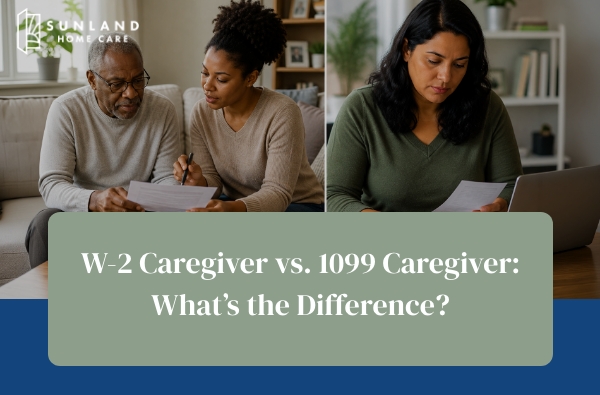
Being a W-2 caregiver means you are an employee rather than an independent contractor.
As a W-2 employee, applicable payroll taxes are handled through the employer’s payroll process. Employers generally withhold the employee’s share of Social Security and Medicare taxes and applicable federal income taxes from wages and pay the employer portion of Social Security and Medicare taxes.
This differs from a properly classified independent contractor, who is generally considered self-employed for federal tax purposes and is responsible for managing their own tax obligations.
W-2 employment isn’t automatically the right arrangement for every caregiver. Some people may prefer independent contracting. For caregivers who want to work as employees within an established home care organization, however, knowing that a position is W-2 can be an important part of evaluating the opportunity.
Being Part of an Established Home Care Company
Home care often takes place one-on-one in a client’s home, but caregivers don’t have to feel like they are working alone.
At Sunland Home Care, caregivers are part of a larger organization focused on providing dependable care to Arizona families. Behind each client-caregiver relationship is a team responsible for coordinating services, communicating important information, managing schedules, and supporting the delivery of care.
That structure can be especially valuable when something changes.
A client’s needs may evolve. A family may have a question. A schedule may need to be adjusted. A caregiver may need clarification about an assignment. Being part of an established company means there is a team and process for handling these situations rather than leaving the caregiver to manage everything independently.
Caregiver Screening Helps Build a Strong Team
Providing care in someone’s home involves trust. Caregivers may assist older adults with personal routines, companionship, mobility, meals, household tasks, and other activities that are part of everyday life.
For that reason, caregiver screening is an important part of building a professional home care team.
Sunland’s hiring process is designed to identify caregivers who can provide reliable, respectful care and work successfully with clients, families, and the rest of the care team.
Screening isn’t only important for clients. Caregivers also benefit from working for a company that takes hiring seriously and is intentional about building a dependable team.
Training Helps Caregivers Feel Prepared
Even experienced caregivers need to understand how a particular home care company operates.
Training can help caregivers understand expectations, procedures, documentation requirements, communication processes, and other aspects of providing care through Sunland Home Care.
It can also give caregivers a clearer understanding of what to do when they have questions or encounter an unfamiliar situation.
The goal isn’t simply to place someone into a client’s home. Caregivers should understand their responsibilities and know where to turn when they need additional information or support.
Scheduling Is More Than Filling a Shift
Scheduling is an important part of home care for both caregivers and clients.
Clients need dependable care, while caregivers need clear information about when and where they’re expected to work. Sunland’s scheduling structure helps coordinate caregiver availability with client needs and keeps the office involved when schedules change.
For caregivers, having a scheduling team means there is a central point of coordination for assignments rather than having to independently arrange every aspect of the client relationship.
When considering home care caregiver jobs in Phoenix or elsewhere in Arizona, it is worth asking how scheduling is handled, how changes are communicated, and who you contact when you have a scheduling question.
Care Coordination Supports Both Clients and Caregivers
Good home care requires communication.
A caregiver may notice a change in a client’s routine, abilities, behavior, or needs. A family member may share new information. The client’s care needs may change over time.
Care coordination provides a way for important information to move between caregivers, the office team, clients, and families as appropriate.
For a caregiver, this means knowing that concerns and observations can be communicated through an established process. You aren’t expected to independently manage every aspect of a client’s care.
Documentation Is Part of Professional Home Care
Caregiver documentation is another important part of an organized home care system.
Documentation can help the care team maintain information about services provided, communicate relevant observations, and keep appropriate records of care.
At Sunland Home Care, caregivers are part of that process.
While paperwork or electronic documentation may not be the first thing someone thinks about when considering a caregiver career, it plays an important role in communication and continuity. Caregivers should receive clear expectations about what needs to be documented and how to complete required records.
Having Office and Team Support Matters
One of the most important questions a caregiver can ask a prospective employer is:
“Who do I call when I need help?”
Caregiving happens in real time. Questions and unexpected situations don’t always occur during convenient moments.
A caregiver might need clarification about a client’s care, have a scheduling question, need to report an important change, or simply be unsure about the appropriate next step.
At Sunland Home Care, caregivers are part of a team rather than operating as independent businesses responsible for managing the entire client relationship themselves. The office and care team provide an established structure for communication and support.
That connection can be especially important because much of a caregiver’s work takes place away from coworkers and supervisors.
W-2 Employment Is One Part of the Bigger Picture
Being a W-2 caregiver at Sunland isn’t just about the tax form you receive.
The employment structure is one part of a larger caregiver experience that includes:
- An established home care organization
- Caregiver screening and hiring processes
- Training and clear expectations
- Coordinated scheduling
- Care coordination
- Documentation processes
- Communication with the office and care team
- Support when questions or concerns arise
Different caregivers prioritize different things when choosing a job. Hourly pay, available hours, location, scheduling, employment classification, training, workplace support, and company culture can all influence whether a position is a good fit.
Understanding the complete opportunity can help you make a more informed choice.
Why Consider a W-2 Caregiver Job With Sunland Home Care?
If you enjoy helping older adults remain comfortable and supported in their own homes, working for an established home care company can provide an opportunity to do meaningful work while being connected to a larger team.
Sunland Home Care’s caregivers play an essential role in the care families receive. At the same time, caregivers have an organization behind them to help coordinate schedules, communicate client information, establish expectations, and provide support.
For caregivers who value being part of a team rather than working entirely on their own, that structure may be an important consideration when choosing where to work.
Looking for W-2 Caregiver Jobs in Phoenix and Across Arizona?
If you’re searching for W-2 caregiver jobs in Phoenix, Mesa, Gilbert, Chandler, Scottsdale, Tempe, Queen Creek, Apache Junction, Gold Canyon, San Tan Valley, Sun City, or Sun City West, consider more than the hourly rate when evaluating your options.
Ask about employment classification, training, scheduling, communication, care coordination, documentation, and what kind of support you’ll have once you’re working with clients.
Looking for a caregiver position with an established Arizona home care company? Learn more about caregiver opportunities with Sunland Home Care and see whether joining our caregiver team is right for you.
Frequently Asked Questions About Being a Caregiver at Sunland Home Care
Are caregivers at Sunland Home Care W-2 employees?
Yes. Sunland Home Care caregivers are W-2 employees rather than independent contractors. This means caregivers work as employees of Sunland and applicable payroll withholding is handled through the company’s payroll process.
What support does Sunland Home Care provide to caregivers?
Sunland caregivers work within an established support structure that includes scheduling, care coordination, documentation processes, and communication with the office and care team. Caregivers have a team to contact when questions or concerns arise rather than independently managing the entire client relationship.
Does Sunland Home Care provide caregiver training?
Training is part of helping caregivers understand Sunland’s expectations, procedures, communication processes, documentation requirements, and responsibilities when working with clients. Caregivers should receive the information they need to understand their role and how to get additional help when necessary.
How does scheduling work for caregivers at Sunland Home Care?
Sunland coordinates caregiver scheduling based on client needs and caregiver availability. Having a scheduling structure gives caregivers a central point of contact for assignments, schedule changes, and scheduling questions rather than requiring caregivers to independently arrange care directly with clients.
What happens if a Sunland caregiver has a question about a client?
Caregivers can communicate questions, concerns, and relevant changes through Sunland’s established office and care-team structure. This helps ensure that caregivers have a resource when they need clarification or need to share information about a client’s care.
Why should I consider a W-2 caregiver job with Sunland Home Care?
Caregivers may choose Sunland because they want to work as W-2 employees within an established Arizona home care company. In addition to employment classification, caregivers can consider Sunland’s training, scheduling, care coordination, documentation processes, team environment, and office support when deciding whether the opportunity is a good fit.
This article provides general educational information and is not intended as legal, tax, or financial advice. Employment and tax matters can depend on individual circumstances. Caregivers with questions about how employment affects their specific situation should consult an appropriate legal or tax professional.